
Many people these days live in apartments or units where space for gardening is often limited. So to help these avid gardeners I thought I would create a series of articles or posts called Organic Gardening for Small Spaces – Growing Naturally, Wherever You Live. I am based in Australia but most of the principles and Ideas still apply. Organic Gardening is one of the most satisfying hobbies that a person may enjoy. I have been gardening in some form or other for about 60 years, so it gives me great pleasure to share my knowledge with you. AI has assisted me in organizing ideas so I can present them in a clear and structured manner. I hope you can get lots of ideas from this series of articles.
AI Assisted Content.
The No-dig Organic Method has been around for a long time and it is particularly suited for people with limited space, renters, beginner gardeners, the elderly as it helps with all the digging etc. It can be used to grow vegetables, herbs and other edible plants without having to spend hours digging up and turning over soil. No dig garden beds can be raised beds, in containers or direct on the ground. The principle is the same. When you dig up the soil you kill or injure your best soil friend – the garden worm. Worms are great for breaking down organic material and creating humus or organic material for the plant to take up as food. They also burrow through the ground making holes which aerate the soil and provide air for the plants roots to take up oxygen.
The first one I made was straight on the ground with no borders. It takes a bit of time for it all to settle in so don’t expect great results immediately but will be worth it in the end. Best time to set up is in late autumn so will ready in spring.
No Dig Organic Gardening: How to Create a Healthy, Productive Garden Without Digging
Have you ever wanted to grow your own fresh vegetables, herbs and edible plants but been put off by the hard work involved in preparing a garden bed? Perhaps your soil is compacted, your garden is small, or you simply don’t have the space or equipment for traditional gardening.
There is a simpler way to get started: no-dig organic gardening.
No-dig gardening is a method of growing plants by building up layers of organic materials on the soil surface rather than digging, turning or disturbing the existing soil. Over time, these materials decompose, improve soil structure and provide nutrients that support healthy plant growth.
It is a practical approach for backyards, raised garden beds, courtyards and even some small-space gardens. It can also help reduce the amount of watering, weeding and ongoing maintenance required.
Best of all, many of the materials can be sourced from your own household and garden, making it an economical and environmentally conscious way to grow food.
1.What is a no-dig organic garden?
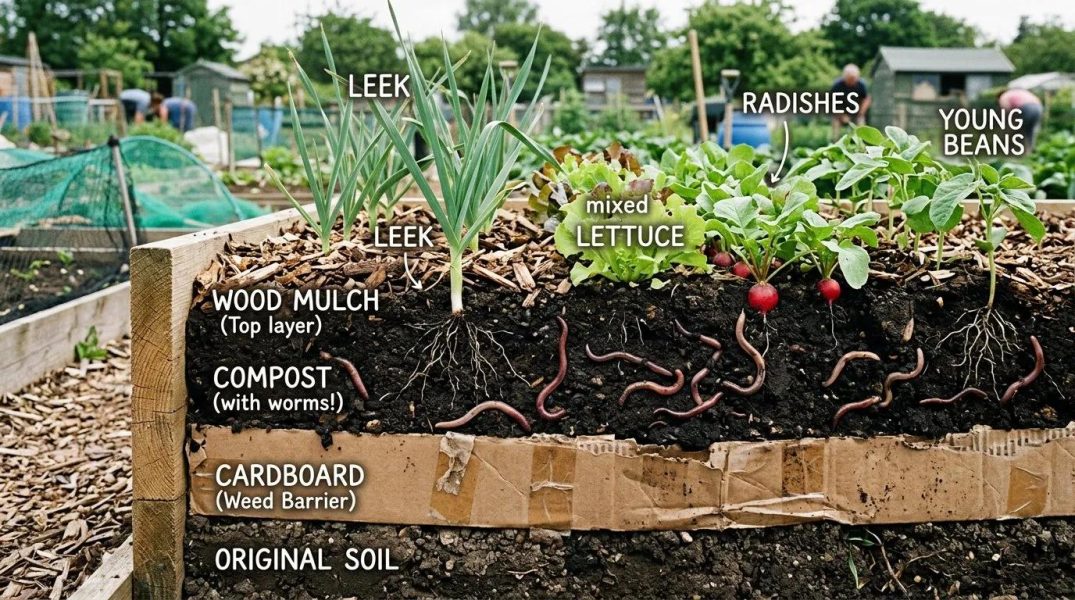
A no-dig garden is created by layering organic materials such as cardboard, compost, aged manure, dried leaves, straw and other plant matter over the ground.
Rather than digging these materials into the soil, they are left on the surface to gradually break down through the activity of earthworms, fungi, bacteria and other soil organisms.
This process is sometimes called sheet mulching or lasagna gardening because the materials are arranged in layers.
The principle is simple: instead of disturbing the soil to prepare it for planting, we feed the soil from above.
The result is a growing environment that can gradually become richer in organic matter, better structured and more supportive of plant roots.
2.Why is no-dig gardening beneficial?
Healthy soil is much more than dirt. It is a living ecosystem containing microorganisms, fungi, bacteria, earthworms and other organisms that contribute to nutrient cycling and soil structure.
Traditional digging and repeated cultivation can disrupt this environment, particularly when soil is repeatedly turned over or worked when wet.
No-dig gardening aims to minimise that disturbance.
Some of the potential benefits include:
- Improved soil structure Adding compost and organic matter helps support soil aggregation. This can improve the balance between water retention, drainage and air movement around plant roots.
- Encourages beneficial soil organisms Earthworms, fungi, bacteria and other soil organisms help break down organic matter and release nutrients into forms that plants can use.
- Better moisture retention Organic matter acts like a sponge, helping soil retain moisture. A surface mulch also reduces direct evaporation from the soil.
- Fewer weeds A layer of overlapping cardboard can block sunlight from existing grass and many weeds. A thick organic mulch also helps prevent new weed seeds from establishing.
- Less physical work There is no need to repeatedly dig, turn or cultivate the soil. This makes gardening more accessible for beginners and people who prefer a lower-maintenance approach.
- Adding compost and organic matter helps support soil aggregation. This can improve the balance between water retention, drainage and air movement around plant roots.
- Encourages beneficial soil organisms Earthworms, fungi, bacteria and other soil organisms help break down organic matter and release nutrients into forms that plants can use.
- Better moisture retention Organic matter acts like a sponge, helping soil retain moisture. A surface mulch also reduces direct evaporation from the soil.
- Fewer weeds A layer of overlapping cardboard can block sunlight from existing grass and many weeds. A thick organic mulch also helps prevent new weed seeds from establishing.
- Recycling household and garden waste Leaves, grass clippings, plant trimmings, cardboard and compostable garden materials can be reused rather than discarded.
What does the science say?
Research supports several of the principles behind no-dig gardening.
A 2017 global meta-analysis published in Global Change Biology, examining 165 publications across 40 countries, found that reduced tillage and no-tillage systems generally supported greater earthworm abundance and biomass than conventional ploughing.
A 2022 global meta-analysis published in the European Journal of Soil Science also found that reduced tillage benefited several groups of soil-dwelling organisms, including springtails and mites.
Research published in Scientific Reports in 2020 found that a long-term reduced-tillage organic farming system improved several soil-quality indicators, including topsoil organic carbon and microbial biomass.
Although much of this research comes from agricultural rather than small backyard gardens, it provides scientific support for reducing unnecessary soil disturbance and maintaining organic matter.
3.What materials do you need?
One of the advantages of no-dig gardening is that you do not need expensive equipment or specialised products.
You can use a combination of readily available organic materials.
The base layer – cardboard or newspaper
Purpose: To suppress existing grass and weeds
Suitable materials include:
- Plain, unwaxed corrugated cardboard.
- Newspaper without glossy coatings.
- Plain brown packing paper.
Avoid glossy magazines, laminated paper, plastic-coated packaging and cardboard containing excessive printing, tape or labels.
Remove parcel tape, staples and plastic before using cardboard in the garden.
Overlap the sheets so that weeds cannot grow through the gaps. Wet the cardboard thoroughly before adding other materials.
If you are converting an existing garden bed that is already relatively weed-free, you may not need this layer.
One of the advantages of no-dig gardening is that you do not need expensive equipment or specialised products.
Brown materials – carbon-rich ingredients
Purpose: To add carbon, improve structure and provide organic matter.
Examples include:
- Dry autumn leaves.
- Straw or pea straw.
- Lucerne hay.
- Sugarcane mulch.
- Shredded untreated cardboard.
- Untreated wood chips (best used as a surface mulch or lower structural layer).
- Dried plant matter.
Brown materials generally contain more carbon and provide a food source for soil organisms as they decompose.
Use a mixture of green and brown materials rather than relying on just one ingredient.
Compost and aged manure
Purpose: To provide nutrients and a suitable growing medium.
Good-quality compost is one of the most important ingredients in a productive no-dig garden.
It helps improve soil structure, adds organic matter and supplies a range of nutrients.
Suitable materials include:
- Mature homemade compost.
- Certified organic compost.
- Well-rotted cow manure.
- Well-rotted horse manure.
- Worm castings.
- Mature poultry manure compost.
Use finished, mature compost in the planting layer. Fresh animal manure can contain high concentrations of nutrients, salts and ammonia, which may damage plant roots. Allow manure to age or compost properly before using it around growing plants.
Mulch for the final layer
Purpose: To protect the surface and conserve moisture.
Suitable organic mulches include:
- Pea straw.
- Lucerne hay.
- Sugarcane mulch.
- Dry leaves.
- Untreated straw.
Mulch helps protect the soil surface from direct sunlight, reduces moisture loss and gradually contributes more organic matter as it breaks down.
4.Step-by-step: How to build your own no-dig garden
You do not need a large backyard to create a no-dig garden. You can start with a small patch of lawn, an existing garden bed or a raised garden bed.
For beginners, I recommend starting with a garden approximately 1 metre long and 1 metre wide. You can always expand later.
Step 1 – Choose your location
Find a reasonably level position that receives sufficient sunlight for the plants you want to grow.
Most vegetables need around 6 hours of direct sunlight daily, although leafy greens and some herbs will tolerate partial shade.
Consider:
- Access to water.
- Protection from strong winds.
- Good drainage.
- Easy access for planting and harvesting.
If you have a small courtyard, a raised garden bed or large growing container may be more practical.
Step 2 – Prepare the ground
If you are building over grass, mow it as low as possible.
Remove large weeds and any invasive plants that may spread through runners or underground roots.
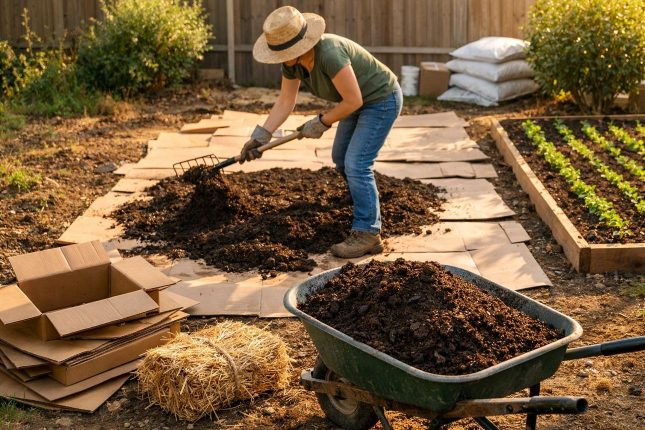
Lay overlapping sheets of plain cardboard across the area. Aim for approximately two layers of cardboard, ensuring there are no gaps.
Water the cardboard thoroughly until it is completely wet.
This creates a light barrier that helps suppress existing grass and weeds while gradually decomposing.
Step 3 – Add your first organic layer
Add a layer of organic material such as chopped garden waste, leaves or aged manure.
If you have compost available, you can add some at this stage.
Water the layer lightly before adding the next one.
Step 4 – Add your brown materials
Spread a layer of straw, dry leaves or sugarcane mulch over the green materials.
This adds carbon and helps create a balanced mixture for decomposition.
Water the layer as you go.
Step 5 – Continue layering
Continue alternating green and brown materials.
A useful starting principle is to use substantially more brown material than fresh green material. For example, you might use a relatively thin layer of grass clippings followed by a much thicker layer of straw or dry leaves.
There is no need to follow an exact recipe. The important thing is to avoid thick, compacted layers of fresh grass or food scraps, which can become slimy and oxygen-depleted.
Step 6 – Add your planting layer
Finish with approximately 15–20 cm of good-quality mature compost or a suitable organic growing mix.
This is where your vegetable and herb seedlings will establish their roots.
For a small raised bed, you can simplify the construction by using cardboard at the bottom, organic matter underneath and a generous depth of finished growing medium at the top.
Step 7 – Add a final mulch layer
Cover the exposed compost with a light layer of straw, lucerne or sugarcane mulch.
Keep mulch slightly away from the stems of young plants to reduce the risk of stem rot.
Water the entire bed thoroughly.
Step 8 – Allow the garden to settle
Ideally, allow the materials some time to settle and begin decomposing before planting.
However, you do not necessarily need to wait months. If the upper growing layer contains mature compost, you can plant seedlings straight away.
Avoid sowing directly into fresh, unfinished organic layers.
As the materials decompose, the garden will gradually settle and reduce in height. This is normal. Simply top it up with fresh compost and organic mulch when necessary.
5.Can you create a no-dig garden in a small space?
Absolutely!
No-dig gardening is not restricted to large vegetable patches. It can be adapted to raised beds, courtyards, patios and compact urban gardens.
Here are three options.
Option 1 – A small raised garden
Use a raised garden bed made from suitable untreated timber, metal or other food-growing-safe materials. Line the bottom with cardboard if it is positioned over grass or soil, then add organic matter and a generous layer of mature compost or growing mix.
A bed approximately 1 metre square is a good starting point.
Option 2 – Large containers
Large containers and troughs can be used to grow herbs and compact vegetables. Make sure they have adequate drainage holes and use a suitable potting mix designed for container growing.
You can add a thin layer of compost and organic mulch to the surface rather than trying to reproduce a deep no-dig garden inside a small pot.
Option 3 – A narrow courtyard garden
A narrow raised bed along a fence or wall can provide room for leafy greens, herbs, spring onions and compact vegetables.
Vertical supports can also be used for climbing beans, peas and other suitable climbing plants.
Remember that containers dry out faster than garden beds, so monitor moisture levels regularly.
6. What vegetables and herbs grow well in a no-dig
Once your growing layer is ready, you can begin planting.
For a small garden, choose plants that produce well without requiring excessive space.
Some good options include:
| Vegetables | Herbs |
| Lettuce | Basil |
| Silverbeet | Parsley |
| Spinach | Coriander |
| Radishes | Chives |
| Spring onions | Thyme |
| Asian greens | Oregano |
| Kale | Mint (in a separate pot) |
| Cherry tomatoes | Rosemary |
Leafy greens and many herbs are particularly good choices for beginners because they can be harvested regularly.
For Australian gardeners, consider your local climate and season when selecting plants. Basil, for example, prefers warmer conditions, while coriander and many leafy greens are generally easier to grow during cooler weather.
Tomatoes and other fruiting vegetables need sufficient sunlight, nutrients and room for their roots.
7.How to maintain a no-dig organic garden
Once your garden is established, maintenance is relatively straightforward.
Keep the soil covered
Do not leave the surface bare for long periods. Add fresh organic mulch when the existing layer becomes thin.
Water according to plant needs
Check the moisture beneath the mulch rather than judging the surface alone. Water deeply when needed, but avoid keeping the growing medium constantly saturated.
Add compost regularly
A thin layer of mature compost added to the surface between crops helps replenish organic matter and nutrients.
Remove weeds early
Although cardboard and mulch help suppress weeds, some will still appear. Remove them before they develop deep roots or produce seeds.
Avoid walking on the growing bed
Walking on garden beds compresses soil and reduces the air spaces needed by plant roots and soil organisms. Design your beds so you can reach the centre from the sides.
Rotate your crops where practical
Avoid repeatedly growing the same plant family in exactly the same position. Rotating crops can help reduce the build-up of certain pests and diseases and balance nutrient demands.
8.Common mistakes to avoid
Even though no-dig gardening is relatively simple, there are a few mistakes that can affect results.
- Using too much fresh grass: Thick layers can become compacted, slimy and oxygen-depleted. Apply thin layers and mix with brown materials.
- Using fresh manure: This may damage young plants. Use properly aged or composted manure.
- Leaving gaps in cardboard: Grass and weeds can grow through uncovered areas.
- Using contaminated materials: Avoid grass clippings or straw that may contain persistent herbicide residues. Some herbicides can survive composting and damage sensitive crops.
- Using poor-quality compost: Compost should be mature, stable and free of obvious contamination.
- Forgetting drainage: Waterlogged soil can deprive roots of oxygen. Raised beds and containers need appropriate drainage.
- Planting directly into unfinished layers: Give seedlings a mature compost growing layer rather than planting into decomposing scraps or fresh manure.
-
9.Why no-dig gardening is a sustainable way to grow food
No-dig gardening is about working with natural soil processes rather than continually disturbing them.
By returning organic matter to the garden, we help support the organisms responsible for decomposition and nutrient cycling.
It also provides an opportunity to reuse materials that might otherwise end up in landfill.
For people living in smaller homes, apartments or urban environments, it offers a practical way to grow fresh herbs and vegetables without needing a traditional garden.
You can start with a small raised bed, a sunny courtyard or a modest section of backyard. Over time, you can build up your garden and experiment with different vegetables, herbs and edible plants.
Healthy soil is the foundation of a healthy garden. Feed the soil, protect its structure and allow nature to do much of the work.
Final thoughts
If you are new to organic gardening, a no-dig garden is a wonderful place to start. It is relatively inexpensive, adaptable to small spaces and encourages a healthier growing environment.
You do not need to create a large garden immediately. Begin with a small bed, use locally available organic materials and observe how your plants respond.
The rewards are not just fresh produce. You are also creating a small, living ecosystem that supports soil health and encourages more sustainable gardening practices.
Also remember you can use the same principles on existing garden beds that are overrun with weeds.
I often use old cardboard or carpet – anything that is breathable ie., lets some air in.
One of my best garden was a no dig method, on never -used before ground. Using planks of long thick timber as frame work, we made a 2m x 2m bed, filled it with cow manure from the local cattle sale yards. To this we added any clean plant material and household scraps. We covered it with old carpet and hessian bags etc. Then we added compost worms and kept adding kichen scraps , grass clipping etc. You have to keep moist at all time. Not over watered. We sold most of the worms when they built up and then planted it to vegetables. They were the best, perfect vegetables ever grown and not a pest attacked them. No need for any fertilizers.
Happy organic gardening!
Scientific references and further reading
These references to give readers access to the research and reputable gardening information.
- Briones, M.J.I. & Schmidt, O. (2017). Conventional tillage decreases the abundance and biomass of earthworms and alters their community structure in a global meta-analysis. Global Change Biology. Read research.
- Reducing tillage intensity benefits the soil micro- and mesofauna in a global meta-analysis (2022). European Journal of Soil Science. Read research.
- Krauss et al. (2020). Enhanced soil quality with reduced tillage and solid manures in organic farming – a synthesis of 15 years. Scientific Reports. Read research.
- Royal Horticultural Society – No-Dig Gardening Guide.
- Botanic Gardens of Sydney – Creating a No-Dig Garden.
- City of Wollongong – No-Dig Vegetable Gardens.
These references support the soil-health principles and practical gardening methods discussed in the article.
British Society of Soil Science+5
No Dig Garden Process
Universal Organics
https://universalorganics.com.au